How a Root Canal Is Performed Using Laser Dentistry
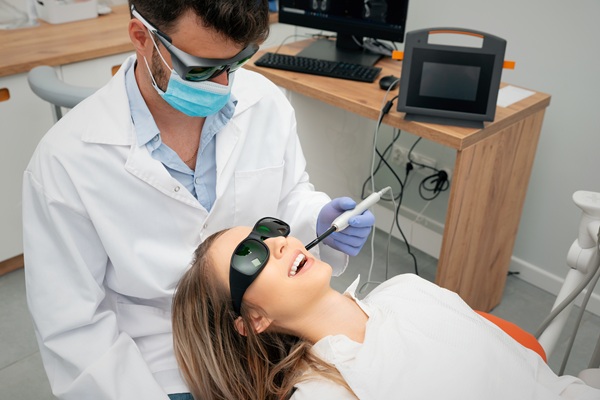
Laser dentistry is changing the way some dentists perform common dental procedures. This advanced dental technology utilizes special dental lasers instead of more traditional dental instruments. In addition to crown lengthening and gum disease treatment, dental lasers can also be tools for root canal procedures.
Why root canals are necessary
A root canal is necessary when a dental patient experiences an infection within their tooth. Removing this infection as quickly as possible is essential so the patient does not lose the tooth. Traditional root canal treatment includes the use of anesthesia and dental drills, while more modern root canal treatment can include using dental lasers.
According to the Academy of Laser Dentistry, today, there are dozens of indications for use with various dental laser devices. In addition, clinical applications continue to increase, making the laser one of dentistry's most exciting advances with unique patient benefits.
How laser dentistry is used to perform root canals
Soft tissue lasers offer dental patients a few advantages. Using dental lasers means that patients can experience less bleeding during and after their root canal and less swelling, which, in turn, often means less pain and the ability to heal in a faster timeframe.
Lasers first remove infected tissue
Dental lasers use a special light beam to remove infected tissue in a patient's tooth. Lasers are useful during root canal procedures because they are precise and allow dental professionals to treat the infected tooth accurately. In addition, the laser eliminates tooth bacteria which sterilizes it.
Filling the tooth
After laser treatment, the tooth is filled using a type of dental filling material. Dental patients need to choose the type of material they want before their root canal appointment. Some of the more common filling choices include porcelain, gold, and amalgam. Dental fillings can last anywhere from 10 to 30 years, depending on the type of material chosen.
Using lasers means less discomfort
Typically, patients who undergo dental laser treatment for root canal procedures experience less discomfort or pain than they would with more traditional root canal procedures. Some dental patients may experience no pain, while others will have more difficulty. While each patient's experience is different, our team takes time to get to know each patient and figure out how to make them comfortable during dental procedures.
Root canals save teeth
Once a tooth is lost, it needs replacing to maintain good oral health. However, root canal procedures can save many different teeth. Your teeth are meant to last a lifetime, which is why root canal procedures are vital. They allow many people to save their teeth and avoid expensive teeth replacement options. However, some patients are nervous about the discomfort often associated with a traditional root canal. Luckily, laser dentistry technology may provide them with a more comfortable alternative. If you want to learn more about laser dentistry and if it is right for you, we can help.
Are you considering laser dentistry in the Napa area? Get more information at https://valleyharvestdentalcare.com or call Valley Harvest Dental Care at (707) 690-6090 for an appointment in our Napa office..
Check out what others are saying about our dental services on Yelp: Laser Dentistry in Napa, CA.
Related Posts
After a tooth extraction, restoring function and appearance is a priority to maintain your oral health. Many individuals require this procedure due to decay, trauma, or advanced gum disease, and the space left behind should not remain untreated. Understanding available tooth replacement options helps ensure you preserve proper bite alignment, chewing efficiency, and long-term dental…
A new dental filling restores tooth structure, and smart aftercare helps it last. Understanding the importance of care and maintenance after you get a new filling can significantly improve your dental health and overall well-being. The following tips can help you maintain optimal oral hygiene to protect and extend the lifespan of your dental fillings. Patients…
An implant crown is made of strong and safe materials to give the patient a reliable long-term replacement option for missing teeth. If you have questions about the materials used to make an implant crown, this review can help you understand what exactly each component is made of and why dentists use these particular materials.There…
Teeth whitening works by applying a peroxide gel that lifts stains from enamel, the tooth’s outer layer. Custom trays hold the gel evenly against the teeth, promoting consistent shade change while limiting gel on the gums. As a general dentist, the focus stays on fit, concentration, and timing to help patients whiten gradually and comfortably.…